

Production of Digital Games With Prepared Training Modules
Using the developed methodology, international student teams designed and produced educational digital games representing selected cultural heritage sites from partner countries. The games integrate historical accuracy, interactive storytelling, game mechanics, and immersive digital environments to increase cultural awareness among young audiences.
Arretium’s Timeworn Tales, Arezzo Amphitheater, Italy
Travel across three historical eras in the ancient city of Arezzo and experience how architecture, culture, and daily life evolved over nearly two thousand years. This role-playing game allows players to explore historical transformations while discovering the rich cultural heritage of the Roman Amphitheatre through immersive storytelling and interactive gameplay.
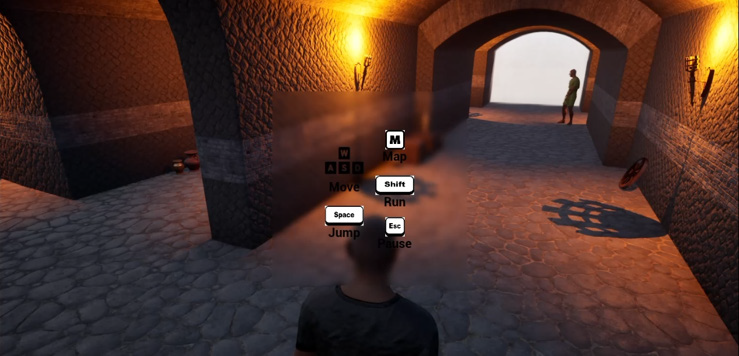
Developed with the University of Florence, this groundbreaking RPG demonstrates historical stratification by presenting the same location across three distinct time periods, showing how buildings and cultural meanings evolve across centuries.
Unique Concept: Players witness the same physical space serve vastly different cultural purposes across 1,800 years, teaching the concept of historical stratification and architectural adaptation through lived experience rather than textbooks.
https://www.youtube.com/watch?v=xBpxhwq8MYY
Empúries Archaeological Site
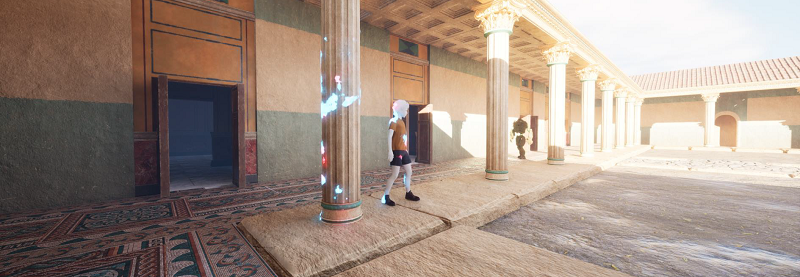
Set in a scientifically reconstructed Roman Domus, this stealth-based adventure challenges players to navigate ancient architecture while uncovering the myths and history of Empúries. Through exploration and strategic gameplay, players learn about Roman domestic life, spatial organization, and classical Mediterranean culture.
Game Overview
Developed with Universitat Politècnica de Catalunya, this innovative stealth rogue-like game uses a time loop mechanic to teach architectural history. Players must navigate a scientifically accurate reconstruction of a Roman Domus while evading Charon, the ferryman of the Greek underworld.
Setting & Genre
Location: Historically accurate Roman Domus reconstruction
Genre: Stealth / Rogue-like / Time Loop
Platform: PC (Unreal Engine 5)
Learning Outcomes
Players explore the architectural floor plan of an ancient Roman household, understanding spatial organization, domestic life, and the cultural concept of “Psychopomps” (spirit guides who escort souls between worlds). Knowing the building layout becomes essential for survival.
https://www.youtube.com/watch?v=9_cYPt-Je1c
Journey to Kybele Phrygian Valley, Türkiye
A peaceful first-person exploration game inspired by the mythology of ancient Anatolia. Guided by King Midas and the goddess Kybele, players solve environmental puzzles, explore the sacred Yazılıkaya monument, and discover the spiritual, musical, and architectural heritage of the Phrygian civilization.
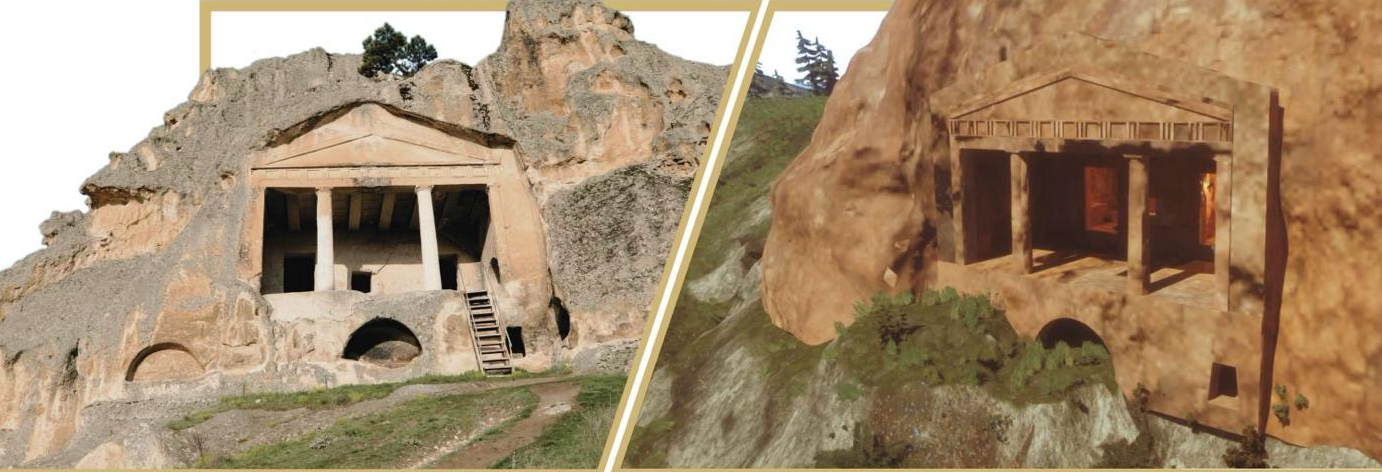
A Contemplative Experience
This first-person exploration game abandons traditional combat mechanics entirely, focusing instead on atmosphere, mythology, and environmental puzzle-solving. An architecture student falls asleep at a ruin and awakens in a mythological realm guided by the legendary King Midas and the Anatolian mother goddess Kybele.
Unique Mechanics
Players progress through observation, sketching, and solving acoustic puzzles using Phrygian musical instruments like the Double Flute. The game teaches through contemplation rather than action, encouraging players to truly absorb the sacred landscape.
Heritage Focus
Phrygian mythology and religious beliefs Rock-cut monuments (Yazılıkaya) Acoustic landscapes and musical traditions Sacred geometry and architectural symbolism Environmental storytelling through ruins Players interact with mythological figures as guides, using ancient instruments to unlock secrets of the monuments—a meditative journey into Anatolia’s spiritual past.
https://www.youtube.com/watch?v=l425COGcejc
Pierre Loti in Eyup,Istanbul, Turkey (1913)
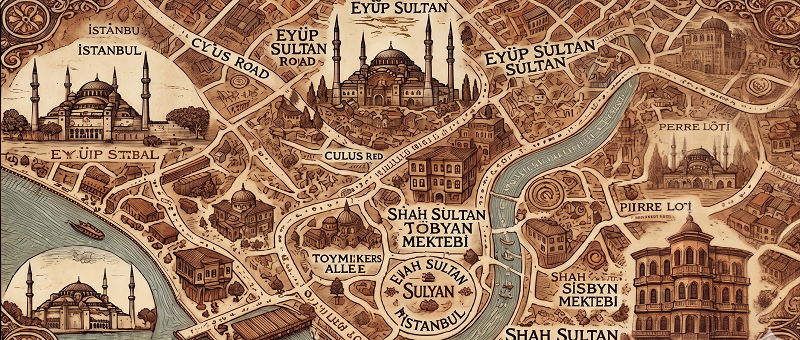
Experience the atmosphere of early twentieth-century Istanbul through the eyes of the famous French writer Pierre Loti. Players explore the historic Eyüp district while interacting with Ottoman traditions, Turkish coffee culture, music, architecture, and everyday social life, revealing both tangible and intangible cultural heritage.
Game Overview
This narrative adventure game emphasizes intangible cultural heritage by placing players in the shoes of famous French writer Pierre Loti as he searches for a lost colleague in the historic Eyup Sultan district during the twilight of the Ottoman Empire.
Heritage Focus
Tangible Heritage: Culus Road, Ottoman fountains, traditional architecture and urban planning of historic Istanbul neighborhoods.
Intangible Heritage: Turkish coffee culture, Ottoman hospitality traditions, classical Turkish music (performed on the Oud), and social customs of the era.
Key Mechanics
Players collect cultural items such as traditional musical instruments and coffee sets to unlock dialogue trees and progress through the narrative. The game rewards cultural knowledge and observation of Ottoman social etiquette.
https://www.youtube.com/watch?v=KvWuNFA6Yh4
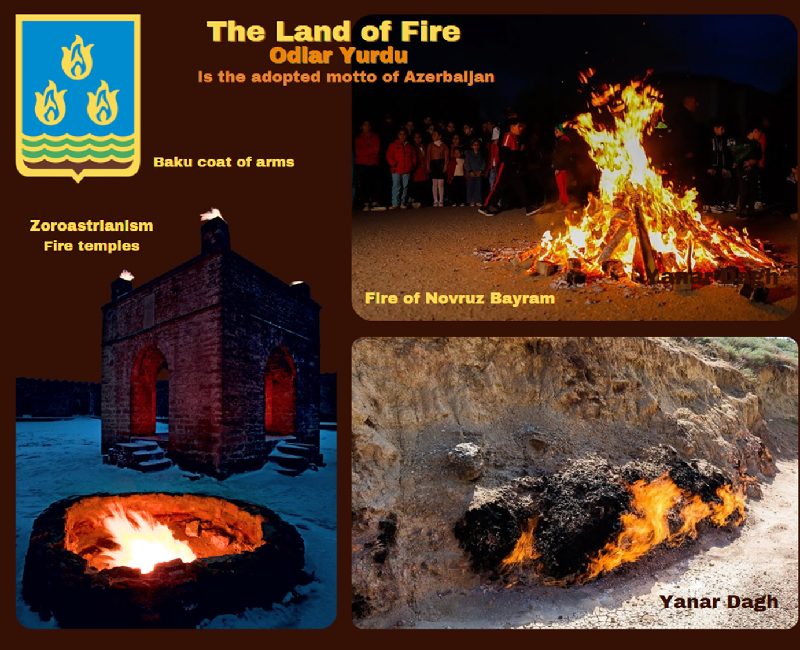
Yalli: Getting Fire, Absheron Peninsula, Azerbaijan
Inspired by Azerbaijani folklore, this 3D platform game transforms the traditional Yalli folk dance into an interactive gameplay mechanic. Players travel through iconic cultural landmarks while learning about ancient fire rituals, petroglyphs, defensive architecture, and the rich cultural traditions of the Land of Fire.
Game Concept
This innovative 3D platformer gamifies the traditional Azerbaijani “Yalli” folk dance, creating a unique rhythm-based movement system. Four heroes brought to life from ancient Gobustan petroglyphs must journey across iconic Azerbaijani landmarks to retrieve the Sacred Fire.
Cultural Heritage Elements
Yalli Dance: Traditional group dance movements become platforming mechanics
Zoroastrian Fire Rituals: Ancient fire worship traditions form the narrative core
Defensive Architecture: Baku Fortress and signaling towers teach military heritage
Petroglyphs: 40,000-year-old rock carvings inspire character design